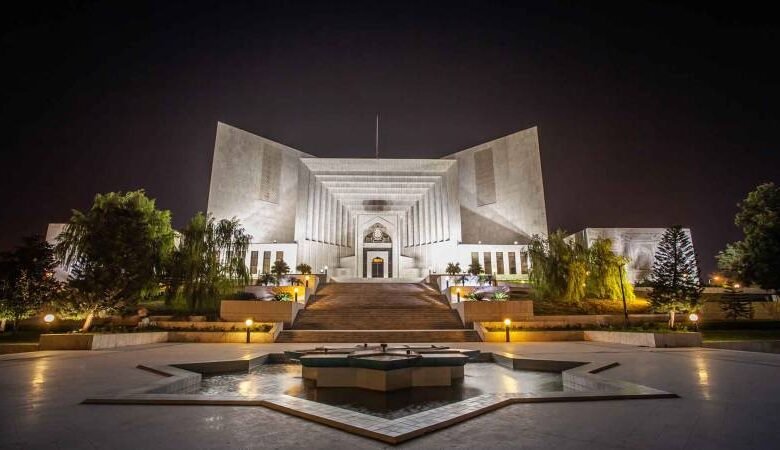
Beyond the Gavel: A Review of Institutional Excellence in Punjab’s Judiciary.
At the heart of Chief Justice Neelum’s tenure is a commitment to the digital transformation of the justice system.



*By: SYED MUDASSAR HUSSAIN SHAH
The appointment of Justice Miss Aalia Neelum as the first female Chief Justice of the Lahore High Court (LHC) on July 11, 2024, was more than a symbolic milestone in the history of Punjab’s judiciary; it marked the beginning of a profound era of institutional rejuvenation. With a distinguished career spanning two decades, Chief Justice Aalia Neelum brought to the office not only a deep mastery of constitutional, criminal, and civil law but also a relentless drive for structural efficiency and technological integration. Over the past two years, her leadership has redefined the administrative and judicial landscape of the Punjab province, turning a vision of "speedy and quality justice” into a quantifiable reality.
A Foundation of Legal Excellence:
Born on November 12, 1966, the Honourable Chief Justice Miss Aalia Neelum’s rise to the pinnacle of the provincial judiciary is a testament to her academic rigor and extensive courtroom experience. Since her enrollment as a lawyer in 1996, she established herself as a formidable legal mind, navigating complex areas ranging from white-collar crime and banking laws to counter-terrorism. Her appointment as an Additional Judge of the Lahore High Court in 2013 and her subsequent elevation as a permanent judge in 2015 provided her with a comprehensive understanding of the judiciary’s inner workings—an experience she has utilized to implement sweeping reforms.
The Technological Revolution, Integrating Justice:
At the heart of Chief Justice Neelum’s tenure is a commitment to the digital transformation of the justice system. Recognizing that the path to justice is often obstructed by bureaucratic inertia and fragmented records, she championed the development and implementation of the "Integrated Criminal Justice System (ICJS)”. By unifying the data of the judiciary, prosecution, police, prisons, the Punjab Forensic Science Agency, Health and the probation and parole departments, this system ensures that from the filing of an FIR to the final sentencing, the entire lifecycle of a case is accessible with a single click.
This is complemented by the "Civil Courts Accounts Management System”, which links judicial fee payments directly with the Case Management System and the National Bank of Pakistan. By automating challan forms via specific PSIDs, the system has effectively eradicated the scourge of counterfeit receipts and financial irregularities. Furthermore, the introduction of a QR-code-based "File Tracking System” has replaced obsolete manual registers, ensuring real-time visibility into the movement of judicial files and significantly reducing delays.
Judicial Accountability and Performance Culture:
CJ Aalia Neelum has been a vocal proponent of accountability and meritocracy within the judicial ranks. To this end, she launched the Integrated Judicial Officers Performance Management System (IJOPMS), a state-of-the-art digital framework that monitors the daily performance of every judicial officer. By digitizing HR records, leave management, and case disposition rates, the system promotes a culture of transparency that holds officials accountable for the timely delivery of justice. The commitment to institutional integrity is further reflected in the overhaul of the Audit Cell, which now features officers from the Pakistan Audit and Accounts Service, ensuring professional oversight of the court’s financial health. Additionally, the launch of a comprehensive "Complaint Portal” allows citizens to register grievances online against any branch or individual within the judiciary without the need for physical visits, directly bolstering public trust in the institution.
Historic Disposals and Case Management:
Perhaps the most striking achievement of the 2024–2026 period is the unprecedented increase in case disposals. When Chief Justice Aalia Neelum assumed office, the LHC faced a backlog of over 200,000 cases. Through a "fast-track” policy for tax, civil, and criminal litigation—supported by the physical audit of all pending cases and the creation of specialized division benches—the court achieved historic results. During the two years LHC disposed of more than 330K cases, which include decisions of more than 173,000 cases just in a single year i.e. 2025, a record-breaking figure that exceeded the number of new filings by 16 percent. Across the province, the district judiciary disposed of an staggering 38.8 million cases in 2025, and during the two years the figures cross 7.9 million, demonstrating the efficacy of the new "Model Courts” and modernized case classification systems.
Infrastructure: Building for the Future:
Chief Justice Aalia Neelum’s reforms extend beyond software and policy; they are physically manifesting in the infrastructure of Punjab. The laying of the foundation stone for the first-ever "Judicial Tower” in Lahore signals a move toward a modern, consolidated judicial hub. Simultaneously, the court has prioritized the construction of judicial complexes in districts such as Mianwali, Kasur, Jhang, and beyond, ensuring that lawyers and litigants have access to dignified facilities, including clean drinking water and shaded seating. Special attention has been paid to the welfare of the legal community and the safety of the judicial environment. The establishment of dedicated day-care centers and ladies’ bar rooms demonstrate a human-centric approach to judicial administration. Furthermore, by securing funding for solarization and e-libraries in bar rooms, the Chief Justice has ensured that legal research remains accessible and environmentally sustainable.
A Legacy of Inclusivity and Progress:
Throughout the career, Justice Aalia Neelum has always been a steadfast advocate for gender equality. As the first female administrative judge of the Anti-Terrorism Courts in Punjab, she consistently fought for the empowerment of women. Under her leadership as Chief Justice, the judiciary has taken decisive steps to strictly implement the "Anti-Rape (Investigation and Trial) Act 2021”, and has fostered a safer, more inclusive environment for females in the Province.
Eradication of Fake Litigation:
The two-year tenure of Chief Justice Aalia Neelum stands as a blueprint for institutional reform in a developing nation. By blending the rigor of traditional law with the efficiencies of 21st-century technology, she has not only minimized backlogs but has also fundamentally improved the quality of the justice-seeking experience. By implementating Bio-matric verification for the litigants and parties, the fake litigation roots out. The tenure of CJ Aalia Neelum has been defined by a refusal to accept the status quo. As these reforms continue to take root, the Lahore High Court is positioned to become a benchmark for modern, efficient, and transparent judicial systems globally…END
The writer can be reached at prolhc2@gmail.com.